Back in 2021, when I had to move and bought a new dryer, I started thinking about things I felt weren’t ideal about my previous one. And one thing I could never get over was how difficult it was to clean the heat exchanger. Over the years, I spent a lot of time on the floor in front of the dryer picking out hair and lint in relatively large quantities. So I decided that my next dryer wouldn’t suffer the same fate.
Everyone that has owned a traditional condenser dryer and a heat-pump dryer should(?!) have noticed the difference and problem with cleaning the heat exchanger on a heat-pump model.
In a traditional condenser dryer you could easily remove the air to air heat exchanger and clean it in your prefered way. With a heat-pump dryer there is a major difference. The heat exchanger is part of the refrigerant system and is impossible* to remove for cleaning and could easily be damaged.
So, what do we do to prevent this fine and fragile slatted structure from clogging with dust and hair? There is a few issues here:
- Clogging, will reduce efficency and increase power consumption
- The buildup of hair and lint will be like a damp swamp at the bottom where bad odors develop over time, which in turn spreads to your clean clothes. Bacterial development?
- Wastes your precious time unnecessarily on cleaning.
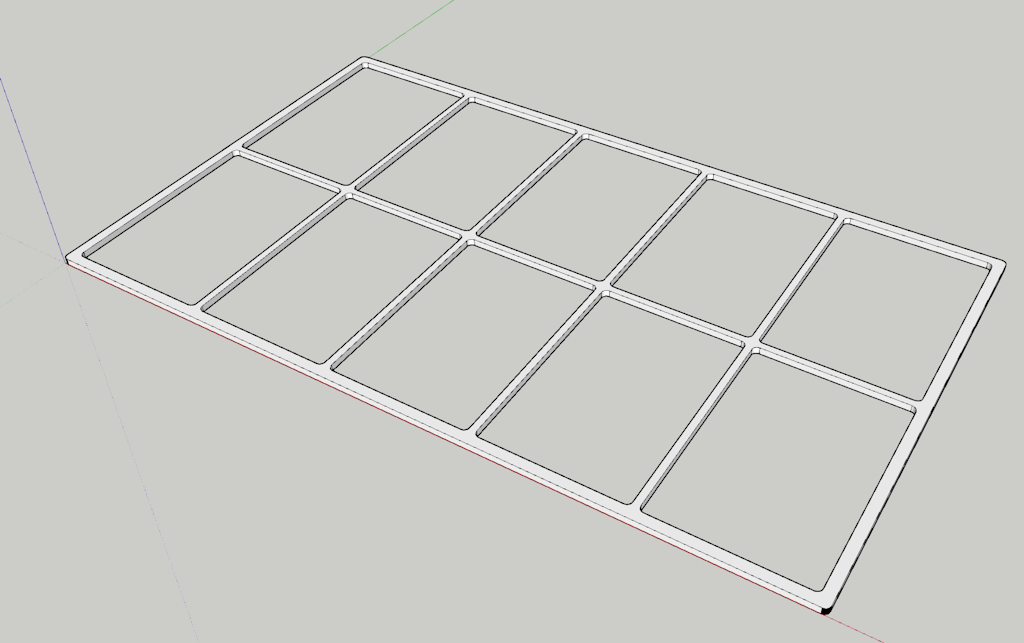
3D Printing to the rescue again. I designed a thin frame with a supporting grid whose dimensions fit quite snug into the opening in front of the heat exchanger.
The target here is to add a second filter stage, that could easily be cleaned without reducing air flow too much. Probably it will reduce airflow compared to a new dryer, but try again after a few hundred cycles then I think I’m good.
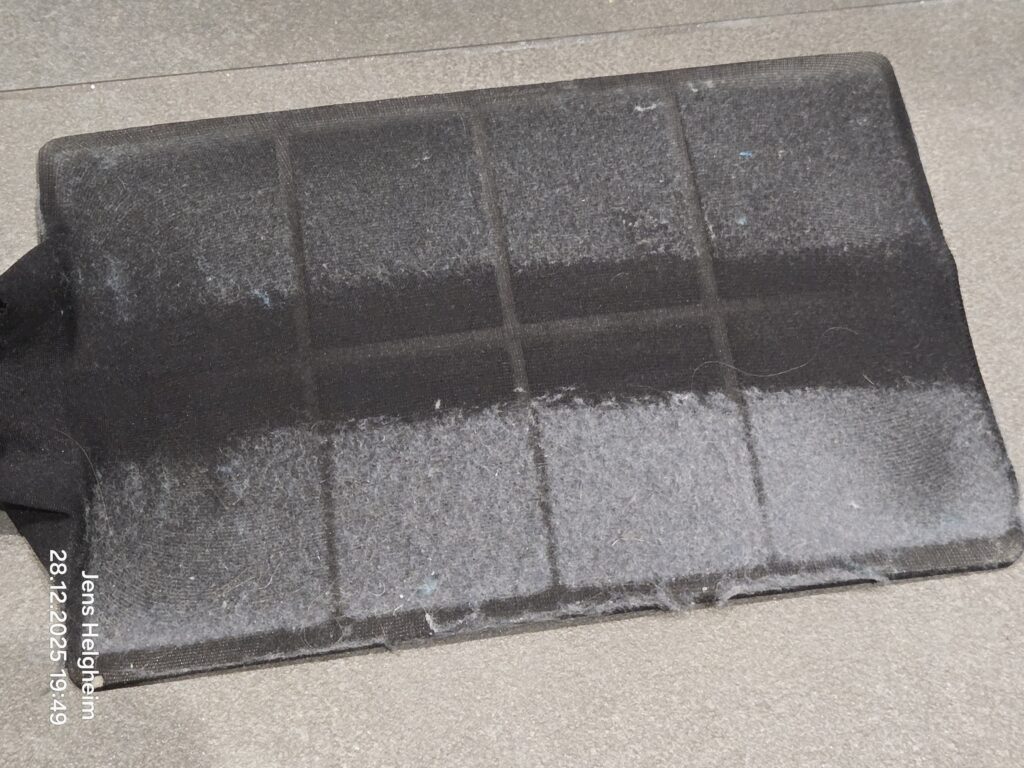
I early decided to use ladies nylon underwear as a filter element, so I carefully sanded the edges of the 3D printed frame so stockings would last more than halvf a second.
This gave me a nice stretched filter that could be vaacumed in just a few seconds and now in the end of 2025, 4 years later look at my heat exchanger (it did complete a few runs without filter in the beginning, and some lint are able to pass the filter – but still)
After 380 cycles:
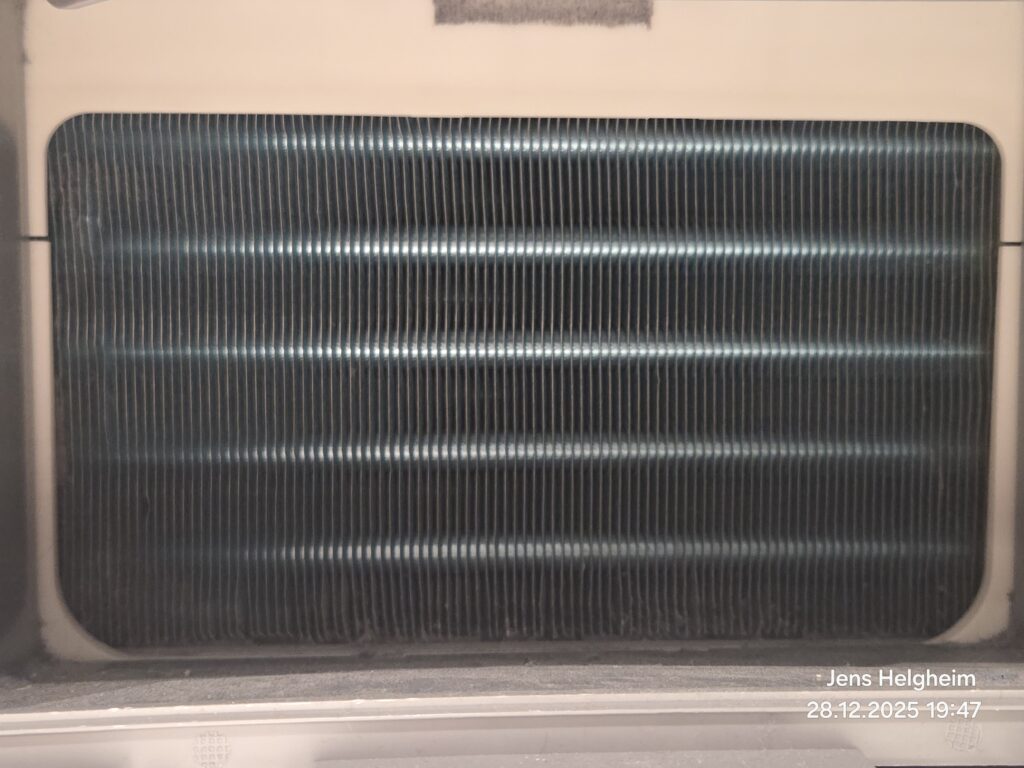
Heat exchanger with filter mounted:
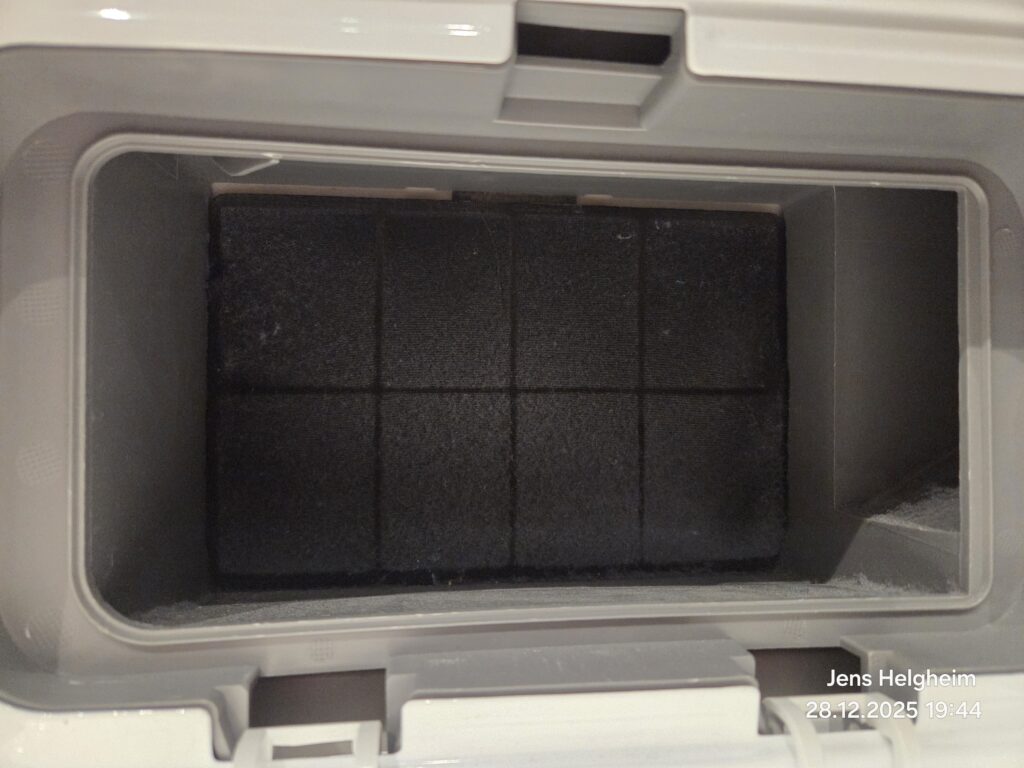
I easily clean the filter with vaacum cleaner. This has not been replaced for a year and halv I think. There is sign og wear around the sharp edges but it has lasted way longer than expected!
Design, just barely enought to resist the tension from the nylon stretched around it. First printed in ABS and I gave one to a friend in PETG and that seem to resist the temperature.
*Please, you know what I mean.